The simple rule
If somebody needs to do something, it is a commitment — it gets an owner and follows that person until it is done.
If something is worth keeping in view but nobody owns an action, carry it forward — it waits on the next conversation's Follow-through step.
If something is worth the organisation noticing, mark a signal — it stays internal and shapes what leadership reads.
Follow-through: where a conversation begins
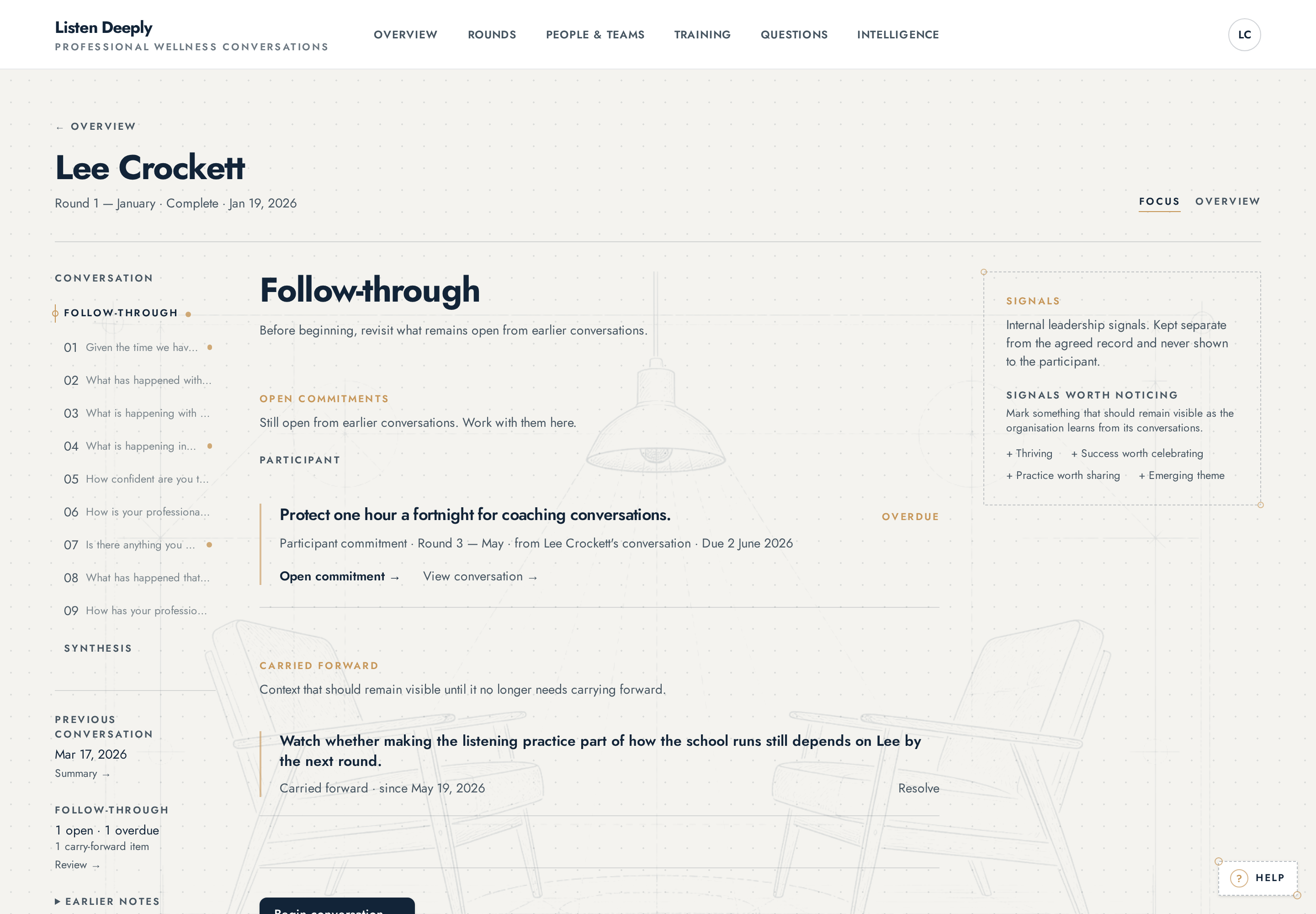
Every conversation workspace opens with Follow-through, before the first question. It holds everything unresolved from earlier conversations with this person: open commitments, grouped by owner, and items carried forward.
Resolve what has genuinely happened — resolving is recorded with who and when. Leave the rest visible; unresolved items simply remain for the next conversation.
Carry forward
Carry forward holds what matters without making it a task: a theme to return to, something to keep an eye on, context the next conversation should not lose.
It is recorded during Synthesis, sits on the next conversation's Follow-through step, and stays there until someone resolves it. The wording stays as written — if it is wrong, resolve it and carry a corrected version forward.
Signals worth noticing
Four quiet markers a facilitator can set on a conversation: Thriving, Success worth celebrating, Practice worth sharing, and Emerging theme.
A signal can be set only once per conversation. Setting one removes it from the choices and lists it under Active signals; removing it there makes it available again.
Signals are kept separate from the agreed record and are never shown to the participant. They feed the patterns leadership reads in Round and Organisation Intelligence.
What there is not
There is no separate list of agreements, next steps or follow-ups. Anything that is an owned action is a commitment; anything else that should stay visible is carried forward. That is the whole model.
Who can do this
The facilitator records commitments, carry forward and signals during Synthesis. Resolving a carried forward item happens on a later conversation's Follow-through step.
Who can see this
Commitments and the shared record are visible to both people in the conversation. Signals are internal to leadership and are never shown to the participant.
Questions
- Should this be a commitment or a carry forward?
- Ask whether a named person has agreed to do something. If yes, it is a commitment. If it just needs to stay visible — a theme, a watch item, context — carry it forward.
- Can I edit something carried forward?
- No. Resolve it and carry a corrected version forward. The record of what was carried stays honest that way.
- Does the participant see signals?
- Never. Signals are internal to leadership and sit outside the agreed record entirely.